
Are You Suggesting Dinosaurs Migrate?
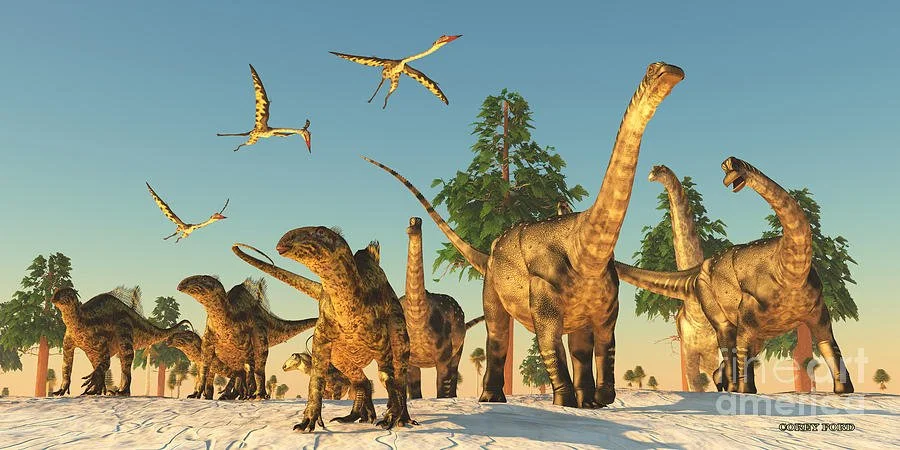
The lives of modern animals often imitate those of the dinosaurs.
It turns out that migration, the seasonal movement of animals from one region to another, is no exception. Many modern migrating animals do this to find food, water, a better climate, etc. And some of them even travel thousands of miles to reach these places!
Some dinosaurs did the same thing. Using fossil evidence, trackways, and modern technology such as isotope analysis, paleontologists are able to take a closer look at these prehistoric animals’ lives and behaviors.
Credit: Corey Ford
Why Would Dinosaurs Migrate?
Reasons for these migrations could have included food availability, changes in climate, or reproductive needs.
One of the main drivers for migration was likely seasonal food availability. This would have pushed dinosaurs to follow vegetation patterns that shifted throughout the seasons.
During the Mesozoic Era, climate patterns were very different from the ones we see today. Despite this difference, dinosaurs were also no stranger to climate change. Earth still experienced seasonal changes in temperature and precipitation. Just like avian dinosaurs we see today, non-avian dinosaurs were affected by climate change. So naturally, they would have had to migrate to more agreeable areas.
They also migrated for reproductive reasons. Dinosaurs would have traveled to areas with more nesting sites or to reproduce with other members of their species. In fact, there is evidence of some dinosaurs, like hadrosaurs, returning to the same nesting grounds seasonally.
Evidence in Sauropods
As some of the largest land animals to ever walk the Earth, sauropod dinosaurs (also known as long-necks) made sure to leave their mark on the world. Despite their, in many cases, gargantuan size, some of the largest sauropod trackways have been discovered in places like Asia and South America, showing evidence of these massive creatures traveling for hundreds of miles annually. These footprints show coordinated movement as a group, rather than random wanderings. With such large body size comes large energy requirements, so these animals would have required constant access to seasonal vegetation across vast landscapes.
Evidence in Ornithopods
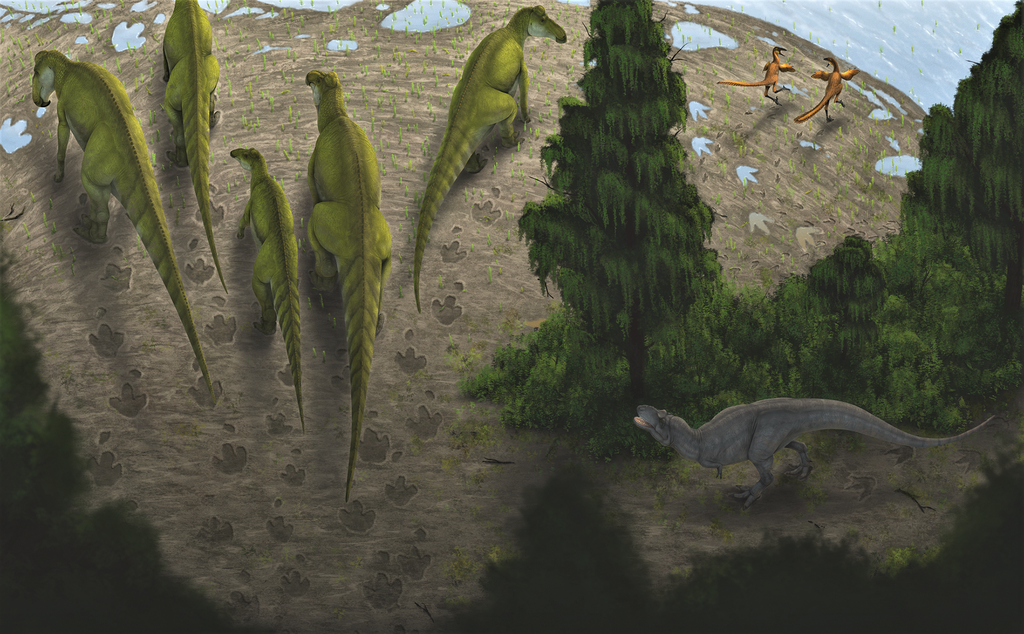
Hadrosaurs, also known as duck-billed dinosaurs, have given us some of the best evidence for dinosaur migration. Fossils from preserved Maiasaura nesting sites, like Egg Mountain and its multiple layers of nests, suggest that these dinosaurs would return to the very nesting sites they themselves were born in, very similar to today’s sea turtles. Some paleontologists have suggested that Maiasaura would raise their young to the point that they could keep up with the herd, with the entire population moving on to the rest of their migration journey.
Credit: Wikimedia Commons
Evidence in Theropods
Migration in predatory dinosaurs such as theropods like T. rex, Allosaurus, and Velociraptor would have looked a little different from their herbivorous neighbors. As meat-eating dinosaurs, theropods would have followed the movement of their prey species across landscapes. T. rex and Allosaurus may have, literally, followed in the footsteps of migrating prey, traveling hundreds of miles in the process.
Meanwhile, smaller theropods like Velociraptor may have either taken much shorter migrations or even been adapted to staying in one territory year-round.
Growth Rings
Tree rings can tell us a lot about the age of the particular tree, but also about seasonal environmental changes it has experienced throughout its life. The rings within dinosaur bones are very similar. When cut into thin sections and examined under a microscope, we can see lines of growth in various thicknesses within the bone that indicate periods of growth; slow growth during resource-deficient periods and rapid growth during plentiful periods.
Isotope Analysis
A very cool technique for gathering information on dinosaur migrations is by isotope analysis. This way, scientists take a look at the ratio of isotopes within the dinosaurs’ bones, which can tell us a lot about the climate and environment in which they lived. We can compare the isotopes within bones from different locations or times, and figure out whether a dinosaur migrated seasonally due to environmental changes.
When dinosaurs ate vegetation or drank water in different areas, isotope ratios from elements such as oxygen, carbon, or strontium became part of their teeth and skeleton. For example, isotope studies of Tyrannosaur teeth have revealed that these predators likely did not stay in one area their entire lives, but rather moved across many different environments.
Many of us have likely pictured dinosaurs as living in one region their entire lives. Thanks to advancements in technology and new fossil finds, we now know that dinosaurs had much more complex behaviors than previously thought. Just like in many of today’s animals, migration would have been essential to the dinosaurs’ way of life and survival. Not only does the understanding of prehistoric animals’ migration patterns teach us about the past, but also how modern animals respond to changes in climate and their environments. Information like this can only become more valuable as we continue in our own area of dramatic climate change.
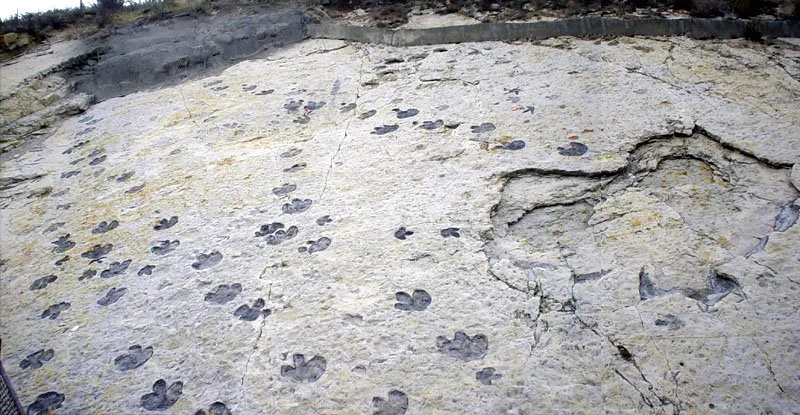
Image from Dinosaur Ridge, Colorado